How-To Guides
One Bad Guest Can Wreck Your Rental. How to Screen Guests Fairly
Screening guests is about behaviour, not assumptions. This guide shows hosts how to reduce risk while treating every guest fairly.
By Logic27 May 2026 2 min read
Information. Reputation. Leverage.
Build, verify and carry a Reputation Record shaped by evidence, responses and resolution — not anonymous stars.
Screening guests is about behaviour, not assumptions. This guide shows hosts how to reduce risk while treating every guest fairly.
Short-term rental hosts face a real tension: they need to protect their property and neighbours, but they must not turn guests away on unfair or unlawful grounds. Good guest screening focuses on verifiable behaviour and clear expectations — not on names, photos or assumptions.
Most problems are prevented by expectations set in advance. State occupancy limits, whether parties and events are allowed, quiet hours, smoking and pet rules, and check-in and check-out times. Ask guests to confirm the rules before booking.
Most booking platforms offer identity verification and show a guest's booking history and reviews. Consider requiring verified identity for all bookings, applied consistently to everyone.
Asking everyone the same questions keeps screening fair and makes it easier to spot answers that do not add up.
These are prompts for a follow-up question, not reasons to assume bad intent.
Where the platform and local rules permit, a security deposit encourages care and provides a route to recover costs if something goes wrong.
Photograph each room before every stay. Without a "before" record, even genuine damage is hard to prove — see our guide to what hosts can do when a guest causes damage.
Most countries and booking platforms prohibit turning guests away on grounds such as race, ethnicity, religion, nationality, disability, gender or sexual orientation. Decline bookings only for consistent, behaviour-based reasons, and apply your rules equally to everyone.
Disclose any security devices as your platform requires, and never place cameras in private spaces. Guests who feel respected are more likely to respect your property.
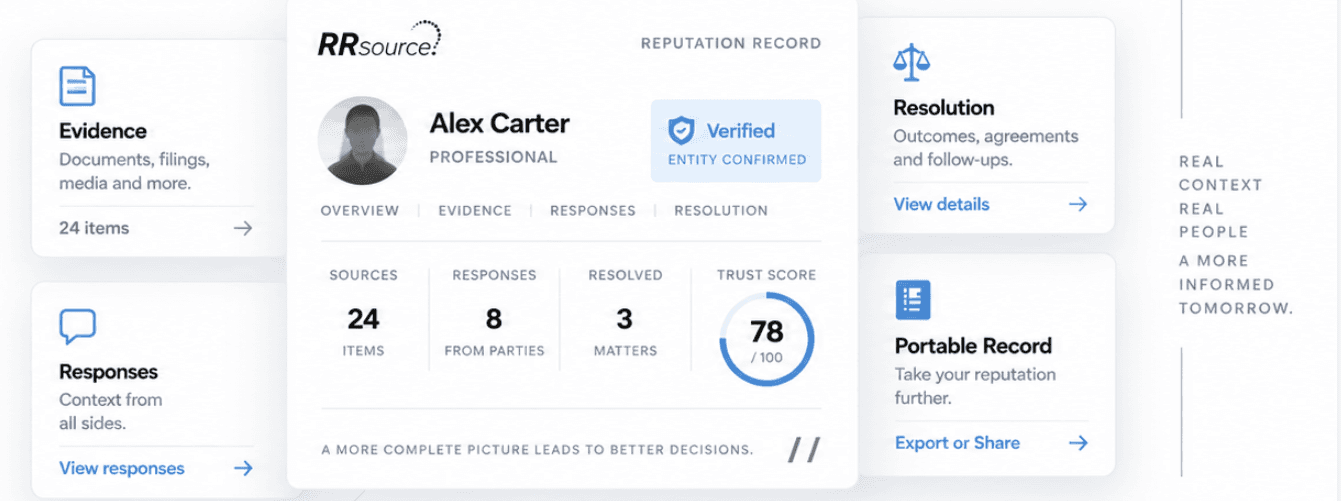
Guests take risks too: listings that do not match reality, heating that does not work, deposits withheld unfairly. RRSource Reputation Records let hosts and guests check each other's verified history before booking. Either side can raise an issue, the other side responds, and the outcome follows the evidence. A guest with a strong record is a guest you can say yes to with confidence.
Short-term rental regulation, registration requirements and deposit rules vary by city and country.
Previous
Who Are You Really Leaving Your Children With? How to Vet a Nanny
Next
Before You Give a Cleaner Your Keys, Do These 9 Checks
Loading comments…

AI may not value dollars, dinar or rupees. Reputation could become the currency machines understand. AI agents are beginning to shop, book services, buy compute and make payments on behalf of people and companies. But machines do not value pounds, dollars, dinar or rupees in the human sense. Money matters to them only because it unlocks something else: access, compute, data, permissions, time and reliable counterparties. As autonomous systems become economic actors, reputation could emerge as one of the most important currencies machines use to decide who — and what — they trust.

A good HGV driver can spend years building experience, trust and specialist knowledge, only to arrive at the next employer with little more than a licence, CPC card and CV. This guide explains how drivers can document their work as it happens — preserving training, assessments, references, incident outcomes and verified achievements so their professional history does not disappear every time they change jobs.

A valid HGV licence tells you whether someone is entitled to drive. It does not tell you everything about the professional history behind the person holding it. From references and employment continuity to CPC, tachograph compliance, driving assessments and documented incidents, this guide explains how employers can build a fuller picture before handing over the keys.