"Have you checked them?" can mean very different things. An online bank means identity verification. An employer might mean a criminal record check. A landlord might mean a credit check and references. Understanding what each check actually tells you — and what it does not — helps you choose the right ones and avoid false confidence.
Identity verification: who is this?
Identity verification confirms that a person is real and is who they claim to be. Common methods include checking a government-issued document for signs of tampering, comparing a live selfie with the document photo, and confirming contact details such as a phone number or email address. In financial services it forms part of "Know Your Customer" (KYC) processes.
What it tells you: this person exists and matches their documents.
What it does not tell you: anything about how they behave.
Background checks: what is on official record?
A background check searches official or commercial records, which may include criminal records, sanctions lists, professional licences, education and employment history, and in some places court judgments. What is available, and what may be used for a given decision, varies greatly by country and is often regulated.
What it tells you: whether certain recorded events exist.
What it does not tell you: the vast majority of everyday conduct, which never reaches an official record.
Credit checks: how are finances managed?
A credit check looks at borrowing and repayment history held by credit reference agencies. It is useful for judging affordability and financial reliability.
What it tells you: how someone has handled credit.
What it does not tell you: how they treat a home, a client or an employer.
Reference checks: what does someone who knows them say?
References offer first-hand insight, but they are chosen by the candidate, often cautious, and rarely include the other side of any problem.
Reputation checks: how have they behaved when trust was on the line?
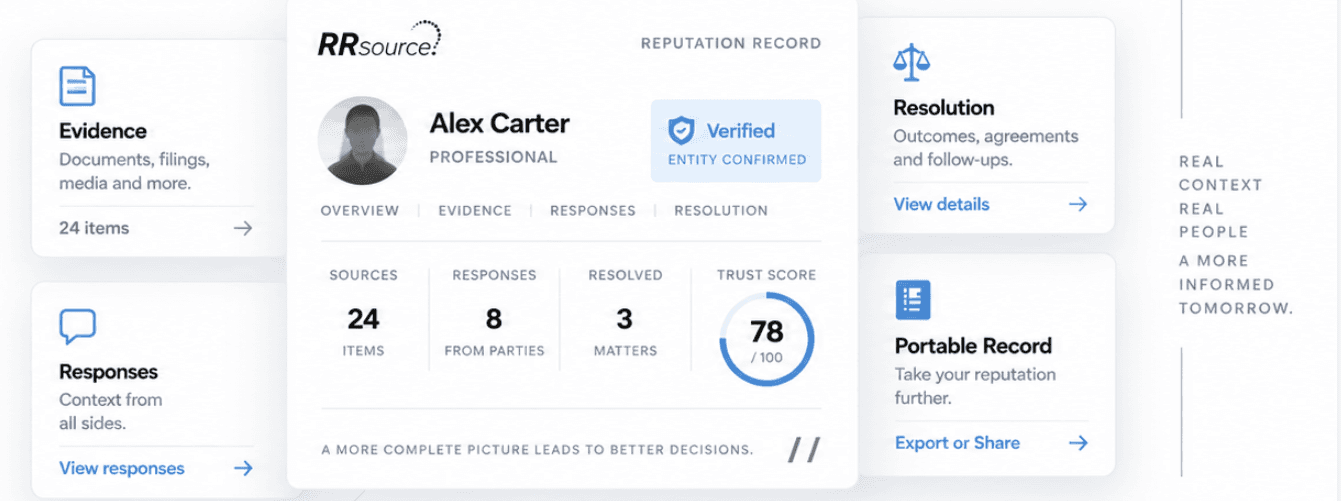
A reputation check looks at documented behaviour in real exchanges — tenancies, jobs, bookings, transactions — including how disputes were handled and resolved. This is the gap that Reputation Records fill.
Which checks do you need?
- Renting a property: Identity, affordability, previous landlord references, reputation
- Hiring a nanny or carer: Identity, legally required background checks, references, reputation
- Hiring a contractor: Business identity, licences and insurance, references, reputation
- Accepting a short-stay guest: Identity, booking history, reputation
Checks work best in layers
No single check answers every question. Identity is the foundation; background, credit and reference checks each add a partial view; reputation shows behaviour over time. RRSource starts with identity verification and builds a behavioural record on top of it. For a deeper explanation, read identity vs credit vs reputation and the trust stack.
Background and credit check rules, consent requirements and permitted uses vary by country.