AI · POWER · WORK · GLOBAL ECONOMY
AI and the Gatling gun: supremacy is on queue — land and labour were
yesterday’s prizes, now it is jobs, money and corporate dominance
The industrial age rewarded control of land, labour, factories and
shipping routes. The AI age may reward control of something less visible
but potentially just as powerful: chips, cloud infrastructure, models,
data and the systems through which other countries work and trade. The
struggle is no longer only over territory. It is increasingly over who
owns the intelligence that can replace labour, redirect profits and
determine which companies dominate the next economy.
The Gatling gun did not invent war.
It changed the mathematics of it.
Richard Gatling's rapid-fire weapon, patented in 1862, allowed far more
firepower to be delivered by fewer people than conventional firearms of
the period.
Its significance was not simply that it fired faster.
It changed the relationship between manpower and output.
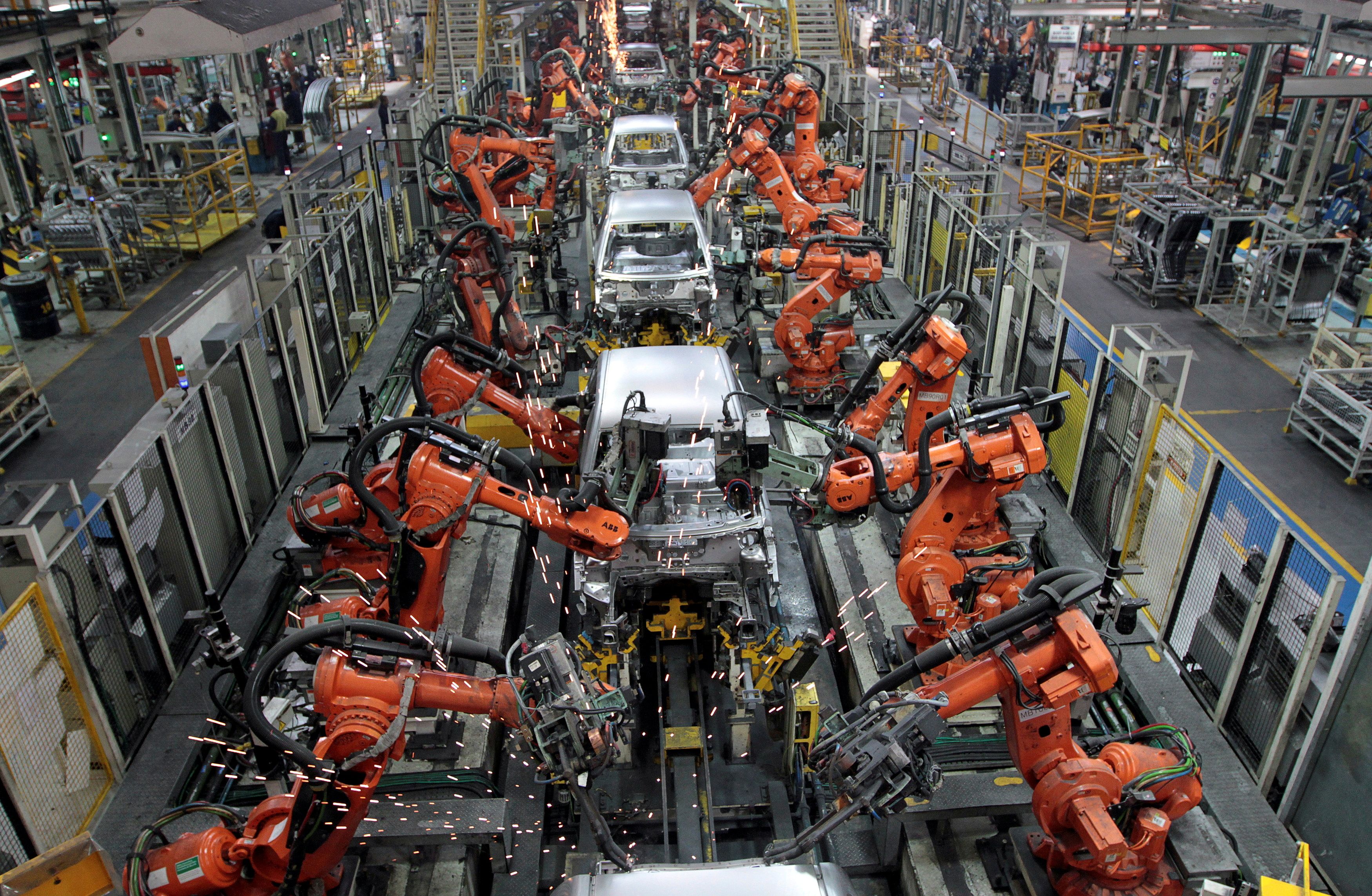
Artificial intelligence may be doing something similar to work.
The defining power of AI may not be that a machine can replace one
worker. It may be that one worker with AI can produce what once
required several.
That sounds like productivity.
And it is.
But productivity has always had another side.
Whoever controls the technology that multiplies output can gain power
over those who do not.
Yesterday's supremacy was easier to see
For much of history, power was physical.
Land.
Ports.
Mines.
Shipping routes.
Agricultural territory.
Factories.
Labour.
Colonial systems were built partly around control of territory,
resources and people.
Industrial supremacy meant producing more ships, steel, weapons,
textiles and machinery than rivals.
The assets were visible.
You could map them.
Count them.
Occupy them.
Artificial intelligence changes the geography.
The new strategic assets sit inside racks and networks
AI depends on a different collection of scarce resources.
Advanced semiconductors.
High-bandwidth memory.
Data centres.
Electricity.
Cloud infrastructure.
Foundation models.
Proprietary datasets.
Engineers.
Capital.
Distribution.
Whoever controls enough of those layers can influence economic activity
far beyond the borders where the infrastructure physically sits.
The concentration is already visible
An OECD review published in July found strong concentration across key
parts of the AI economy.
Three major cloud providers accounted for about 74% of the global cloud
market in the data cited by the OECD.
Nvidia accounted for roughly 90% of the GPU market in the same underlying
evidence.
The OECD also found that estimated US AI investment in 2025 was more than
twice that of other OECD countries, while the five largest US technology
companies spent about $400bn on capital expenditure that year and were
forecast to spend about $660bn in 2026.
These figures do not mean one country or company controls AI.
They do show why infrastructure ownership matters.
If intelligence becomes infrastructure, the owners of the
infrastructure may collect rent from economies that merely consume it.
The battlefield is moving from land to labour
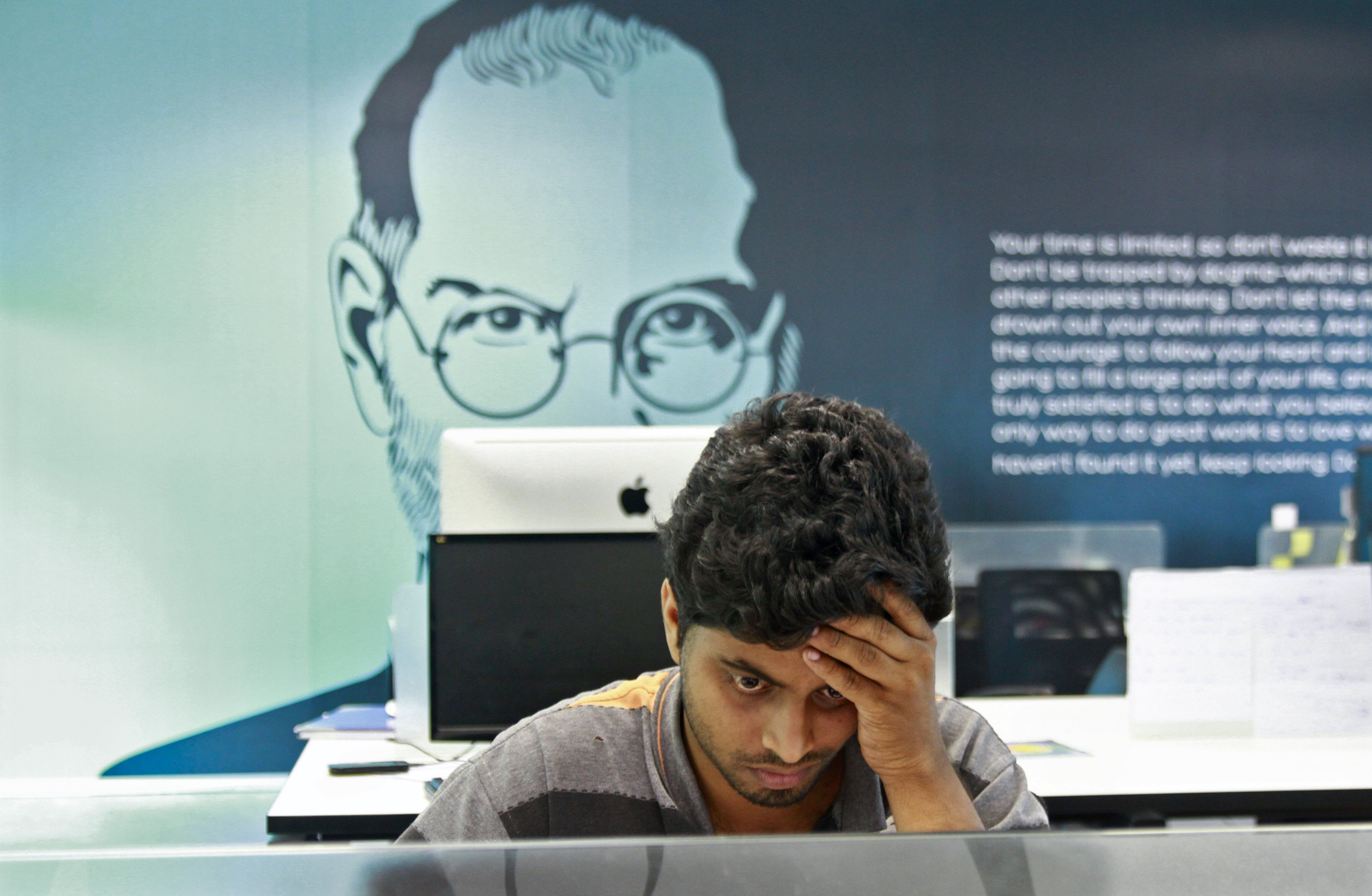
The first major economic pressure may be felt through jobs.
AI can write code.
Analyse documents.
Answer customer queries.
Translate.
Summarise.
Search.
Produce marketing material.
Assist with legal research.
Help design software.
Perform administrative work.
The International Labour Organization says large-scale displacement
remains limited so far.
Its June 2026 review found real but uneven productivity improvements and
said reported time savings have often been modest.
But it also warned of risks to younger workers, job quality and equality
as AI spreads through workplaces.
A separate ILO-World Bank study covering 135 countries warned that some
developing economies could experience disruption before receiving the
full productivity dividend.
That is where the Gatling gun analogy matters
The point is not violence.
It is multiplication.
A technology changes the balance when it allows a smaller number of
operators to produce dramatically more output.
Imagine a department that once required 100 people.
AI does not need to automate all 100 jobs.
If it makes 25 employees productive enough to perform the previous output,
the economic effect is enormous.
Seventy-five people have not necessarily been directly replaced by a
machine.
They have been made less necessary by the productivity of the people who
remain.
AI does not have to beat every worker. It only has to change how many
workers are required.
Then the money moves
Labour income does not simply disappear into the air.
When companies substitute technology for labour, spending moves
elsewhere.
Model subscriptions.
Cloud bills.
Chip purchases.
Data-centre leases.
Electricity.
Software licences.
Infrastructure financing.
The important economic question therefore becomes:
Who receives the money that used to be paid to labour?
That question is global
Consider a company outsourcing digital work internationally.
Traditionally, money may travel from a Western client to a services firm
in India, the Philippines, eastern Europe, Africa or Latin America.
The services company pays workers.
Those workers spend locally.
Salaries support housing.
Shops.
Schools.
Transport.
Taxes.
Local businesses.
AI can alter that circulation.
A larger share of the expenditure may instead travel through the
companies supplying compute, models and cloud infrastructure.
The West may not get the jobs back
This distinction matters.
If AI automates work previously outsourced from London to Bengaluru, that
does not necessarily mean a worker in London gets the job back.
The job may simply require fewer human beings anywhere.
What can return is the economic value.
The company buying AI services may pay infrastructure providers
headquartered in the United States or elsewhere in advanced economies.
Investors in those companies may capture more of the productivity gain.
Capital receives more.
Labour may receive less.
The new struggle may not be over where the worker sits. It may be over
who owns the machine that makes the worker unnecessary.
Corporate dominance may become geopolitical power
Historically, countries possessed strategic assets.
Increasingly, some of the most important AI assets belong to
corporations.
Nvidia designs critical chips.
Amazon, Microsoft and Google operate enormous cloud networks.
OpenAI, Anthropic, Google, Meta and others develop advanced models.
Private companies determine access, pricing, technical standards and
deployment decisions across important parts of the AI stack.
That does not make governments powerless.
States still regulate.
Tax.
Purchase.
Subsidise.
Restrict exports.
Control energy and infrastructure policy.
But the relationship between state power and corporate technological
power is becoming more important.
The OECD is already warning about gatekeepers
The OECD's 2026 review described AI markets as dynamic but warned that
concentration could become entrenched where access to key inputs is
restricted.
Hardware and cloud computing are particularly difficult markets for new
entrants because they require extraordinary amounts of capital and
specialised infrastructure.
Competition can weaken when a small number of companies control inputs
that everybody else needs.
The pattern is familiar.
Search engines produced gatekeepers.
Social media produced gatekeepers.
Mobile operating systems produced gatekeepers.
AI could produce another generation.
But supremacy is always on queue
Technological dominance rarely remains permanent.
Rivals copy.
Innovate.
Build alternatives.
Governments intervene.
Standards change.
Costs fall.
Today's strategic advantage becomes tomorrow's commodity.
That is what “supremacy on queue” means.
There is always somebody behind you waiting for their turn.
China is trying to shorten the queue
Semiconductor capability demonstrates the point.
China has invested heavily in reducing dependence on foreign technology
while US export restrictions have attempted to constrain access to the
most advanced chips and equipment.
This week Chinese memory-chip manufacturer CXMT announced mass production
of a new generation of memory technology designed to increase density and
lower costs.
It is one example of how restrictions can simultaneously preserve an
advantage and encourage rivals to build substitutes.
No technological moat should therefore be assumed permanent.
India is trying to move from labour supplier to infrastructure owner
India offers another example.
For decades its competitive advantage came partly from skilled digital
labour.
Now it is investing heavily in semiconductor manufacturing and AI
infrastructure.
India has committed more than $21bn to semiconductor incentives.
Applied Materials announced this week that it plans to invest $5bn in
India over the next decade in research, supply chains and workforce
development.
The strategic objective is clear:
Do not merely provide workers to the technological economy. Own more of
the technology itself.
This is why sovereignty is becoming digital
Sovereignty once meant borders.
Increasingly it also involves dependency.
Can a country's banks function without foreign cloud infrastructure?
Can its businesses access advanced models?
Can its universities obtain enough computing power?
Can domestic companies afford inference?
Can the government audit systems used in critical public services?
Can it continue operating if another country restricts access to chips?
Those questions increasingly resemble older questions about energy,
shipping and industrial capacity.
The new empire does not need a flag
This is where the analogy becomes uncomfortable.
Economic dependency does not require territorial occupation.
A country can retain its flag.
Parliament.
Borders.
Currency.
Elections.
Yet its businesses can still depend heavily on infrastructure,
intellectual property and platforms controlled elsewhere.
That is not colonialism in the historical sense.
The analogy should not erase the violence and coercion of colonial rule.
But economic dependence can still create asymmetric power.
You no longer need to own another country's land to collect part of the
value produced inside it.
AI may make corporate borders more important than national borders
A model can operate globally.
A cloud platform can serve customers in hundreds of countries.
A semiconductor can sit inside infrastructure across continents.
The company's legal headquarters may be in one country.
Its users may be everywhere.
Its economic influence can therefore cross borders without moving people.
This is a different kind of scale from the multinational corporations of
the industrial age.
Intelligence itself becomes exportable infrastructure.
Then comes the question of money
If productivity rises while fewer workers are needed, income distribution
changes.
The company may become more profitable.
Customers may receive cheaper services.
Shareholders may benefit.
Highly skilled workers may command greater wages.
But displaced workers can lose income.
Governments can lose payroll-tax receipts.
Local communities can lose spending.
The gain and the loss do not necessarily occur in the same country.
That makes AI an international distribution problem as well as a
technological one.
Developing economies could face disruption without the dividend
The ILO and World Bank have already given this problem a useful phrase:
disruption without dividend.
Their 2026 research found that developing economies generally have lower
aggregate exposure to automation than richer countries.
But weaknesses in digital infrastructure can prevent them from capturing
the productivity benefits at the same speed.
A country could therefore suffer pressure on internationally traded jobs
while lacking sufficient domestic AI infrastructure to capture the new
value replacing them.
That is a very different problem from simple automation.
The worker also enters a new queue
The same technological race occurs at the individual level.
Workers adopt AI.
Become more productive.
Gain an advantage.
Then everybody else adopts it.
The advantage disappears.
What was exceptional becomes expected.
Knowing how to use AI may eventually become as ordinary as knowing how to
use email or a spreadsheet.
The worker must then find another source of differentiation.
This is where reputation becomes more important
AI can reproduce skills increasingly quickly.
It can draft.
Code.
Analyse.
Summarise.
Research.
Present.
The easier competence becomes to manufacture, the less valuable the claim
of competence becomes by itself.
What remains harder to manufacture is history.
Did this person actually deliver?
Were they trusted?
What happened when something failed?
Did they resolve it?
Who can corroborate their record?
When skills become easier to generate, verified history becomes harder
to replace.
The same applies to companies
AI lowers barriers to looking competent.
A new company can generate a polished website in hours.
Produce professional marketing.
Write proposals.
Build customer support.
Generate sales material.
Appearance becomes cheaper.
Proven performance does not.
In an economy saturated with AI-generated competence, reputation may
become one of the remaining ways to separate what looks capable from what
has demonstrated capability.
Supremacy is not only a national question
Countries are competing.
Corporations are competing.
Workers are competing.
Models are competing.
Infrastructure providers are competing.
Everybody wants to reach the productivity advantage first.
But everybody behind them is learning.
That is why supremacy is on queue.
The window closes.
Yesterday's breakthrough becomes tomorrow's baseline.
The real prize is what gets built during the window
The Gatling gun eventually became obsolete.
Its underlying principle did not.
Rapid-fire weapons evolved.
Rivals developed their own.
The advantage moved.
AI may follow the same pattern.
Today's leading model will not remain the leading model forever.
Today's dominant chip will eventually face competitors.
Today's AI skills will become common.
The lasting advantage will come from what countries and companies build
while the window is open.
Infrastructure.
Companies.
Intellectual property.
Distribution.
Human capability.
Reputation.
Capital.
Revolutionary technology does not grant permanent supremacy. It grants
time.
Land and labour were yesterday's prizes
The next contest may look less dramatic.
There may be no invading army.
No occupied capital.
No new border drawn on a map.
Instead, the transfer may occur through employment.
Subscriptions.
Cloud bills.
Semiconductor purchases.
Intellectual property.
Corporate profits.
And dependency on systems built elsewhere.
The result could be a world in which countries remain politically
sovereign while increasingly competing over who owns the machinery of
economic intelligence.
Yesterday the prize was territory and labour. Tomorrow it may be the
jobs, money and companies that sit on top of intelligence itself.
Editorial note: The Gatling gun comparison in this
article concerns the economic effect of technologies that multiply the
output of a smaller number of operators. It is not intended to equate
workplace automation with warfare or to suggest that contemporary
economic dependency is equivalent to historical colonialism. Current
evidence does not establish inevitable mass unemployment from AI:
international research finds substantial variation in exposure,
productivity effects and employment outcomes across countries and
occupations.