Trust Case Studies
The Cleaner With a Key — and Missing Valuables
For four years I had their key. When the bracelet went missing, nobody asked me what happened. They only asked me to leave the key on the table.
By Logic27 November 2025 3 min read
Information. Reputation. Leverage.
Build, verify and carry a Reputation Record shaped by evidence, responses and resolution — not anonymous stars.
For four years I had their key. When the bracelet went missing, nobody asked me what happened. They only asked me to leave the key on the table.
Pulse Stories are first-person stories written by RRSource. This is not one real person's account: names, places and details are invented, but the events reflect situations documented in public reporting.
I cleaned the Harrisons' house every Thursday for four years.
I knew that house better than they did. I knew the third stair creaked and that Mrs. Harrison hid chocolate behind the flour. I knew which of the boys still wet the bed and never said a word about it, just changed the sheets and put the cartoon ones back on so he wouldn't notice. When their dog was old and couldn't make it to the garden, I cleaned up after him without being asked, and when he died I cried in their laundry room.
They gave me a key in my second month. Mrs. Harrison pressed it into my palm and said, "We trust you completely." I put it on its own ring. I never once let it touch my other keys.
It was a normal Thursday. I did the kitchen, the bathrooms, the bedrooms. I left at one.
At six that evening, Mr. Harrison called me. He didn't say hello. He said his wife's gold bracelet — her mother's — was missing from the dish on her dresser, and had I seen it.
I said no. I said I'd dusted the dresser but I didn't remember a bracelet. I offered to come straight back and help look.
There was a long pause. Then he said, "I think it's better if you don't come back. Please leave the key in the post box."
I asked him if he thought I took it. He said, "I'm not accusing anyone." And then he hung up.
I put the key in the post box that night. My hands were shaking so much I dropped it twice.
Within two weeks I had lost three more houses. Mrs. Harrison was in a parents' group with half my clients. Nobody told me what was said. They just sent messages. We've decided to make other arrangements. We're cutting back. One simply stopped replying.
I have no contract. No employer. No one to appeal to. My whole business was my reputation, and my reputation was whatever was said about me in rooms I would never be in. I couldn't prove I hadn't taken it. You can't prove a nothing.
I cleaned offices at night for eight months to pay my rent. My daughter asked why I had stopped singing in the kitchen. I told her I was tired, which was true.
Ten months later, Mrs. Harrison's number appeared on my phone. I let it ring out. She called again.
When I answered, she was crying. They had sold their car. The buyer had found the bracelet wedged down between the passenger seat and the door. She must have taken it off on the drive home from a dinner, she said. She was so sorry. She didn't know what to say.
I asked her if she'd tell the other families. She said it was "a bit awkward to bring up now," but she'd "mention it if it came up."
It never came up.
She offered me the Thursdays back. I said no. Not because I was proud, though I was. Because I would never again be able to walk past that dresser without feeling my whole life balanced on a dish.
People say the truth comes out in the end. Sometimes it does. It just doesn't travel as far as the lie.
The context: The International Labour Organization estimates there are at least 75.6 million domestic workers worldwide, and in its 2021 report found that around 81% are informally employed — often with no contract, no employer process and no formal way to respond to an allegation. For many, reputation spread by word of mouth is the entire business.
If something goes missing at home:
What would have helped: a fair process in which a concern is raised, evidence is considered and the person named can respond. On RRSource, a report is a first-hand account rather than a verdict, and a Resolution — including "it was found" — is recorded where everyone can see it. Read hiring a cleaner or housekeeper and how to respond to an unfair complaint.
Loading comments…

Dating apps were built to make strangers discoverable. AI, reverse-image search, facial recognition and persistent digital traces are making them discoverable in ways many users never intended. For women in particular, the problem is no longer simply whether a dating profile is private. It is whether a photograph, first name or fragment of biography can be connected to a workplace, social account or home life outside the app.

HGV employers can check licences, qualifications, penalty points, CPC training and tachograph compliance. Yet those checks still leave a harder question unanswered: what has this driver actually been like to work with over time? In a high-risk industry built on movement, the gap between legal eligibility and professional reputation may be wider than many employers realise.
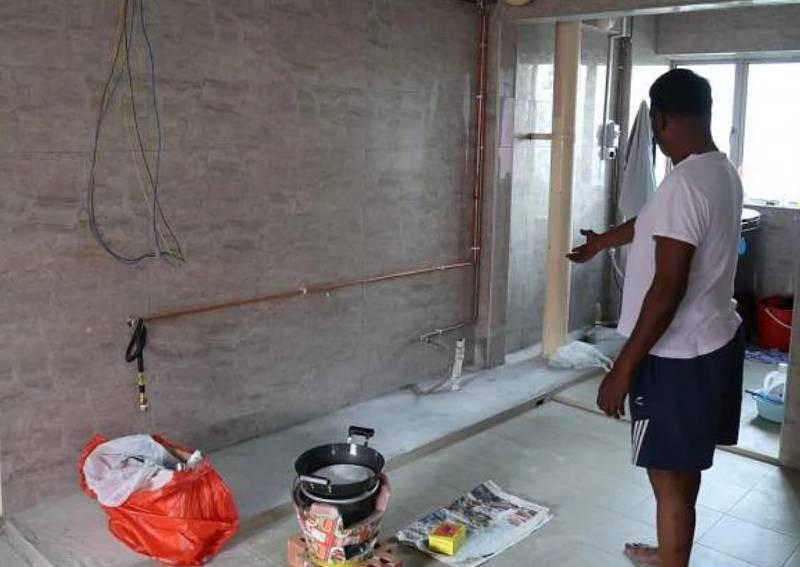
A homeowner pays a deposit, the contractor stops turning up and communication breaks down. This fictionalised example shows how the dispute was documented and resolved.